I like my phones and I’ve always been an Android fan boy. I did spend a bit of time being an Apple fan boy with an iPhone, iPad, Macbook Pro, Mac mini – all that sort of stuff. But then I had a fight with Apple about a keyboard and got kinda sick of the restrictiveness of the Apple ecosystem so switched to Android – never really looked back.
Many Android phones have passed through my ownership and the thing that’s always annoyed me about all phones in general is that in the race for smaller and lighter phones they just became practically impossible to repair. If you’ve read any of the posts on this blog then you’ll know I’m well into repairing stuff. Makes me feel warm and fuzzy inside.
Quite a while ago I dropped my Pixel 6 Pro and cracked the glass case on the back. Everything worked fine so I wasn’t too bothered. But then on occasions as I put my hand into my pocket to retrieve my phone the shattered bits of glass would stick in my finger and draw blood. This annoyed me. So out came a tube of super glue and I put some super glue over the cracked glass and it smoothed it all off and held it together. Unfortunately during this repair some of the glue ran into the USB C charging port which meant I could no longer charge it with a cable. This wasn’t a massively massive problem as I had a wireless charger. It was slow and I had to remember to take the charger with me when I was away for a day or two. Still wasn’t a major problem. Until I reworked my whole home automation type stuff and the IP address for my garage door controller and office heater changed which meant I had to change some stuff in my Android home automation app that I’d written. Made the changes, rebuilt the app and then realised that I couldn’t install it on my phone as the USB C connector was knackered. This was a problem. A big one.
For a while I switched to my Mother’s old Pixel 3A that had a working charging port and I could update my software. All was going well but the camera was a bit annoying. I’d take a picture of something, hear the click and assume it was done only to find the picture took a second or two to take and I’d pointed the camera away from the subject and ended up with several pictures of my crotch.
This would not do.
On my travels across the internet I found a device called the Fairphone. Pretty popular in Europe, less so in the UK. There are many great features about this phone. It’s not some crazy power hungry power user top spec processor so the battery would last for a couple of days without charging. Three or four if you’re careful with it. It’s also made with lots of recycled parts and best of all it’s built to be repaired.
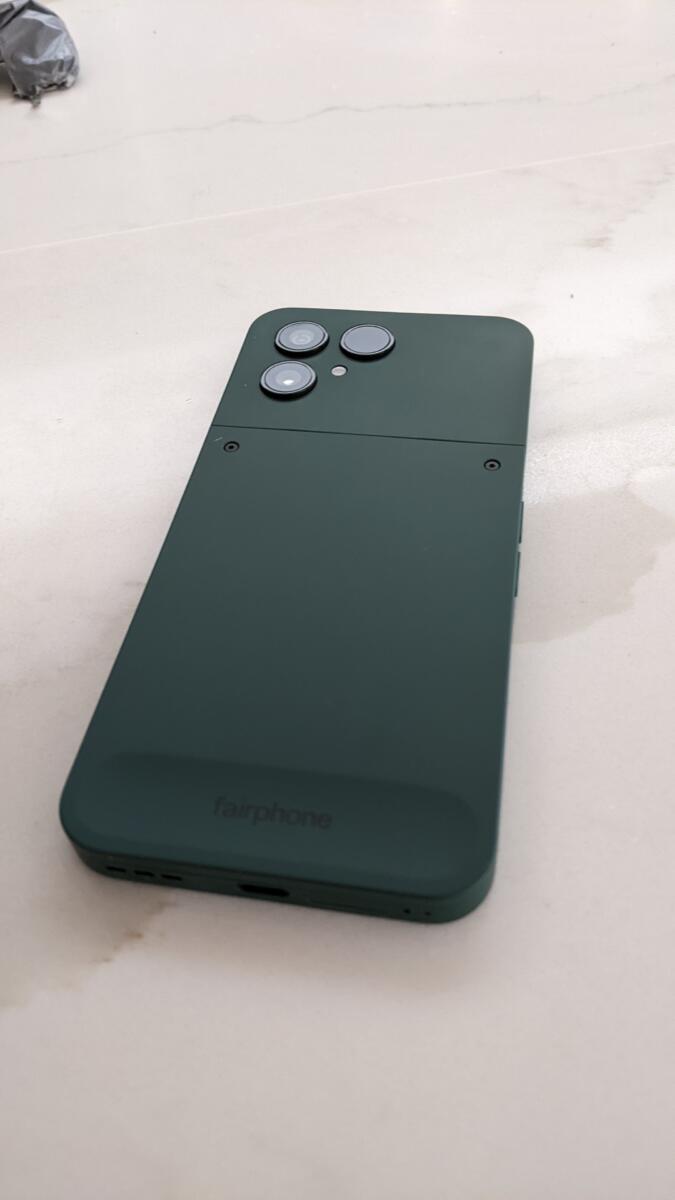
If I was to crack the screen it would cost me £80 to buy a new one and I could replace it myself without suction cups and heat guns and glue guns and all that nonsense. If I was to pour super glue into the USB C port it would cost me £8 to buy a new one and repair it myself. Same goes for the battery…replaceable, camera lenses…replaceable. All sorts of stuff can be fixed on it, with a screwdriver.
Wonderfully happy with my purchase. The average mobile phone lasts for 2.5yrs before ahem it’s ready for recycling which generally means it ends up in landfill. I’m aiming for 5yrs before replacing this fella. It just works. Oh, and the added bonus it was only £450 – which is better than the £950 I was looking at for a Pixel 10 Pro – which is utterly unrepairable.